Texas bourbon broke every rule Kentucky wrote over 200 years ago. When Garrison Brothers opened in 2006 as Texas’s first legal bourbon distillery, experts predicted failure. The extreme heat would ruin barrels. The angel’s share would be catastrophic. Traditional bourbon couldn’t survive triple-digit summers.
They were wrong about failure but right about everything else. Texas heat does accelerate evaporation. Barrels do breathe aggressively. Traditional approaches don’t work. But instead of ruining bourbon, these challenges created a distinct regional style that now competes with Kentucky’s finest at international competitions.
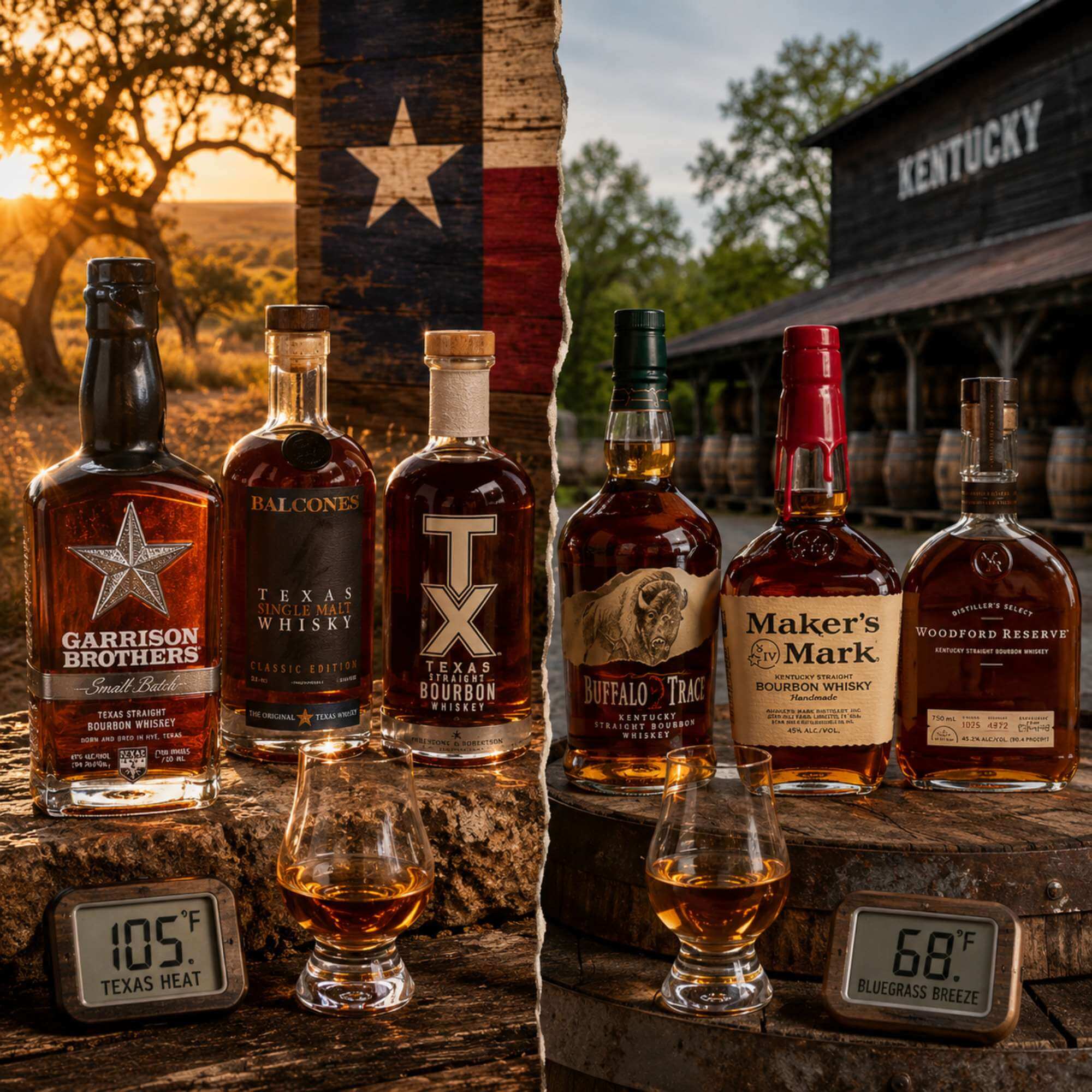
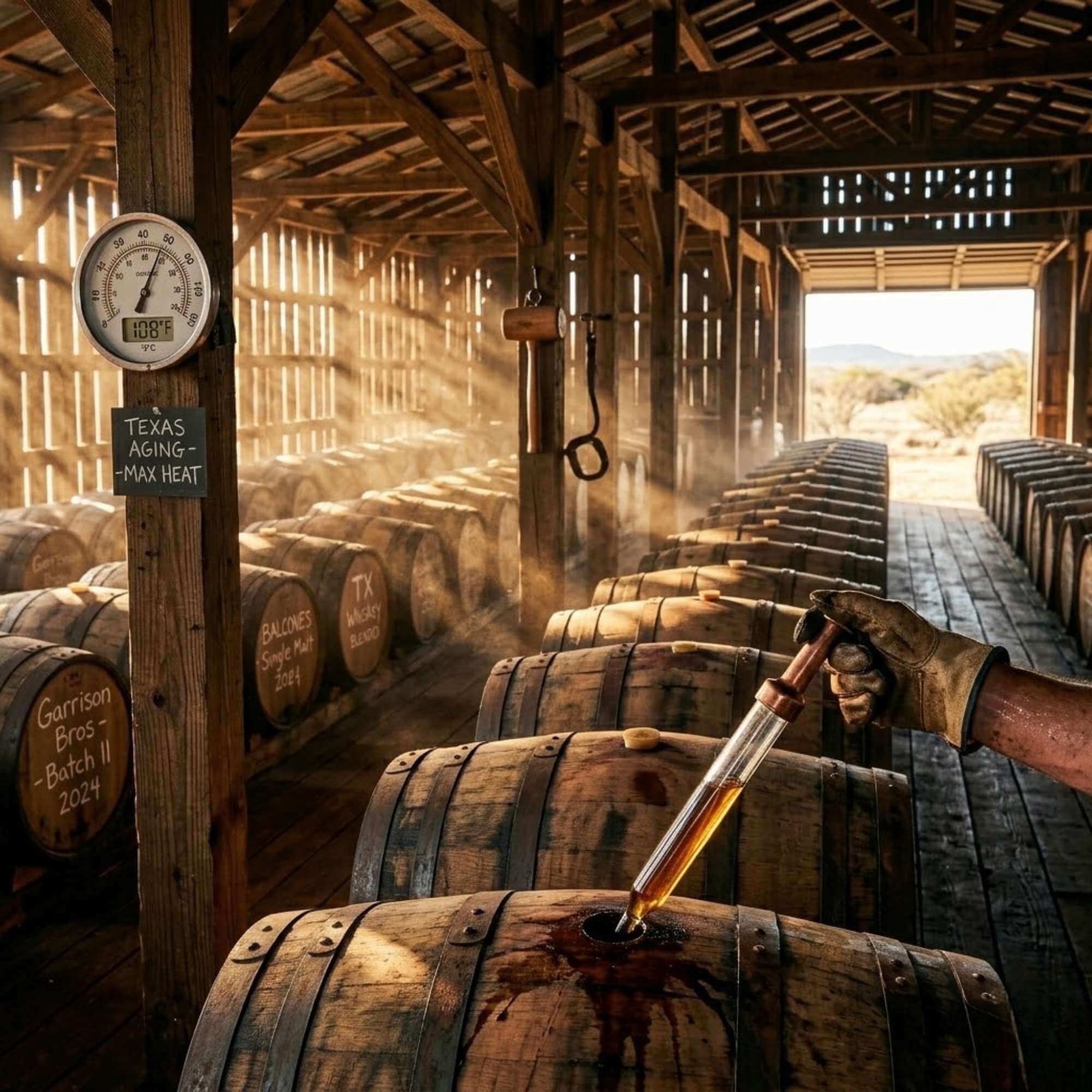
Texas bourbon differs from Kentucky bourbon primarily through accelerated aging caused by extreme heat. Texas rickhouses reach 110°F in summer, forcing barrels to expand and contract more aggressively than Kentucky’s moderate climate. This means four-year Texas bourbon develops complexity matching eight-year Kentucky bourbon. Texas distillers also use locally grown corn, limestone-filtered water from different aquifers, and innovative aging techniques that create bolder, more oak-forward flavor profiles than traditional Kentucky bourbon.
The Climate Advantage
Temperature defines the fundamental difference between Texas and Kentucky bourbon. Kentucky rickhouses maintain relatively stable temperatures year-round, with summer highs around 85-90°F and winter lows rarely dropping below freezing. This moderate climate creates slow, gentle aging that Kentucky distillers perfected over two centuries.
Texas rickhouses experience temperatures that shock Kentucky distillers. Summer temperatures inside metal and wood rickhouses regularly exceed 110°F, sometimes hitting 120°F during heat waves. Winter temperatures can drop to 20-30°F during cold fronts. This 90-100 degree annual temperature swing forces barrels to expand and contract more in one Texas year than in four Kentucky years.
The expansion-contraction cycle drives aging chemistry. When barrels expand in heat, whiskey penetrates deep into charred oak’s porous structure, extracting vanillin (vanilla flavor), lactones (coconut notes), tannins (structure), and caramelized wood sugars. When temperatures drop, barrels contract and push whiskey back out, carrying extracted compounds. Each cycle adds layers of flavor.
Angel’s share (evaporation loss) reaches 8-12% annually in Texas compared to Kentucky’s 2-4%. This concentrates the remaining whiskey, increasing proof and intensity. A barrel that starts at 125 proof might reach 140-150 proof after four Texas years. Kentucky bourbons gain proof slowly, rarely exceeding 130 proof in similar timeframes.
The heat acceleration phenomenon isn’t linear. Four years in Texas doesn’t simply equal eight years in Kentucky. The aggressive extraction creates different flavor compounds in different proportions. Texas bourbon develops bold oak character quickly but may lack the subtle complexity that extended Kentucky aging provides. Neither is superior, but they taste distinctly different.
Water Sources and Terroir
Limestone-filtered water connects Texas and Kentucky bourbon through geology. Both regions sit atop massive limestone deposits that filter groundwater through ancient rock. However, the specific limestone formations differ significantly, affecting mineral content and final bourbon character.
Kentucky draws water from the same limestone aquifer that creates the state’s famous bourbon identity. This water contains specific calcium and magnesium ratios that Kentucky distillers consider essential to bourbon production.
Texas distillers access different limestone formations through the Edwards Aquifer and Hill Country springs. The Edwards Aquifer limestone dates to the Cretaceous period, creating water with different mineral profiles than Kentucky’s Ordovician limestone. These differences create subtle but detectable flavor variations.
Garrison Brothers in the Hill Country draws water from underground aquifers filtered through pink granite and limestone. The granite adds unique mineral characteristics impossible to replicate in Kentucky’s limestone-only geology. Blind taste tests consistently identify this mineral backbone as distinctly Texan.
Corn Varieties and Mash Bills
Texas bourbon’s corn comes from Texas farms, not the Midwest grain belt that supplies most Kentucky distilleries. This local sourcing creates flavor differences starting at the raw ingredient level before distillation or aging affects character.
Texas corn varieties bred for hot, dry conditions develop different sugar and oil contents than Iowa or Illinois corn. Higher oil content in Texas corn creates a richer mouthfeel in finished bourbon. Some Texas distillers contract specific corn varieties with farmers, controlling genetics from seed to bottle.
Yellow dent corn dominates both regions, but some Texas distillers experiment with heritage varieties. Ironroot Republic uses heirloom corn strains that produce lower yields but distinctive flavors. These antique varieties contain higher oil percentages and unique flavor compounds that modern hybrid corn eliminated.
Mash bill percentages follow federal bourbon requirements (minimum 51% corn), but Texas distillers often push corn percentages higher. Garrison Brothers uses approximately 74% corn compared to standard Kentucky recipes, around 70-75%. The extra corn creates sweeter bourbon that balances aggressive oak extraction from heat aging.
Distillation and Aging Differences
Garrison Brothers uses copper pot stills that produce bourbon in small batches with more character and congeners that create flavor complexity. Most large Kentucky distilleries use column stills for continuous production of cleaner, more neutral spirits. The pot still distillation process takes significantly longer, allowing more copper contact that removes sulfur compounds while preserving fruity esters and other flavor compounds.
Texas bourbon rarely carries age statements beyond four years. This isn’t because Texas distillers bottle young bourbon, but because the accelerated aging makes age statements misleading. Four-year Texas bourbon develops complexity that might take eight years in Kentucky.
Kentucky’s traditional age statements (4, 6, 8, 10, 12+ years) reflect the slow, steady aging their climate provides. This correlation between age and quality doesn’t translate directly to Texas, where four years might represent peak maturity for some barrels. The “too much oak” problem happens faster in Texas. Kentucky distillers might oak bourbon for 15-20 years (Pappy Van Winkle, for example). Texas distillers rarely age beyond 6-8 years before oak overwhelms the bourbon.
Seasonal variation affects aging speed within single years. Texas’s extreme seasonal swings create more dramatic differences between summer and winter aging than Kentucky experiences. A barrel that enters the rickhouse in January ages differently than one entering in July.
🥃 Save 10-30% on Every Bottle of Bourbon
Shop Texas and Kentucky bourbon online for pickup or delivery. 35+ Texas locations with knowledgeable local staff.
Flavor Profile Differences
Texas bourbon tastes bolder and more oak-forward than Kentucky bourbon. The aggressive barrel aging extracts intense vanilla, caramel, and toasted oak flavors quickly. Where Kentucky bourbon might taste subtle and refined, Texas bourbon announces itself immediately with big, bold characters.
Vanilla and caramel notes appear strongly in both regions but develop differently. Kentucky’s slow aging creates smooth, integrated vanilla that feels part of the bourbon’s fabric. Texas’s fast extraction creates intense vanilla that sits prominently in the flavor profile. Neither approach is superior, but they create distinctly different drinking experiences.
Oak tannins structure bourbon and create astringency. Texas bourbon develops heavier tannin profiles faster than Kentucky bourbon. This tannin structure makes Texas bourbon taste “chewier” with more texture. The trade-off: Texas bourbon can become over-tannic if aged too long, while Kentucky bourbon rarely faces this problem before 12+ years.
Spice notes come from grain choices and barrel char. Rye in the mash bill creates pepper and cinnamon spice. Oak char contributes clove and baking spices. Texas’s heat intensifies whatever spice the recipe includes, making rye Texas bourbon taste more aggressively spicy than rye Kentucky bourbon with identical mash bills.
The finish (how flavor lingers after swallowing) separates good bourbon from great bourbon. Texas bourbon often shows longer, more intense finishes due to higher proof and concentrated flavors. Kentucky bourbon might show more complex finishes with flavors evolving over time.
Proof and Bottling
Texas bourbon typically is bottled at a higher proof than Kentucky bourbon. Where standard Kentucky bourbon bottles are at 80-90 proof, Texas craft distillers often bottle at 90-100 proof or higher. The concentrated flavors from fast aging can handle higher proof without harshness.
Cask-strength (barrel proof, uncut) bourbon bottling preserves maximum flavor. Texas distillers frequently offer cask strength expressions hitting 110-130 proof. These powerful bourbons showcase the distillery’s work without dilution. Kentucky also offers cask-strength products, but the practice appears more common among Texas craft distillers.
Small-batch bourbon blends multiple barrels (5-50 typically) for consistency. Single-barrel bourbon comes from one specific barrel, creating unique bottles that vary between barrels. Both regions produce both styles, but Texas craft distilleries often emphasize single barrel programs that showcase their rickhouses’ microclimate variations.
Production Scale and Philosophy
Texas bourbon production operates at craft scale. The largest Texas distillery produces roughly 20,000-30,000 cases annually. Kentucky’s largest operations produce millions of cases yearly. This scale difference affects every production decision from grain sourcing to quality control.
Small batch production allows hands-on attention impossible at an industrial scale. Texas distillers often personally taste every barrel, decide barrel placement, and select which barrels get bottled versus blended. Kentucky’s large distilleries employ teams of specialists who manage thousands of barrels through standardized systems.
Distribution reach follows production scale. Kentucky bourbon appears in every state and many countries worldwide. Texas bourbon distribution is concentrated in Texas with limited national presence.
Kentucky bourbon respects tradition carefully. The state’s bourbon heritage spans 200+ years. Most Kentucky distilleries follow established recipes and techniques that have proved successful. Texas bourbon embraces innovation freely. Without 200 years of tradition to defend, Texas distillers experiment aggressively with heirloom grains, unique barrel finishes, and non-traditional aging techniques.
Tasting Texas vs. Kentucky Bourbon
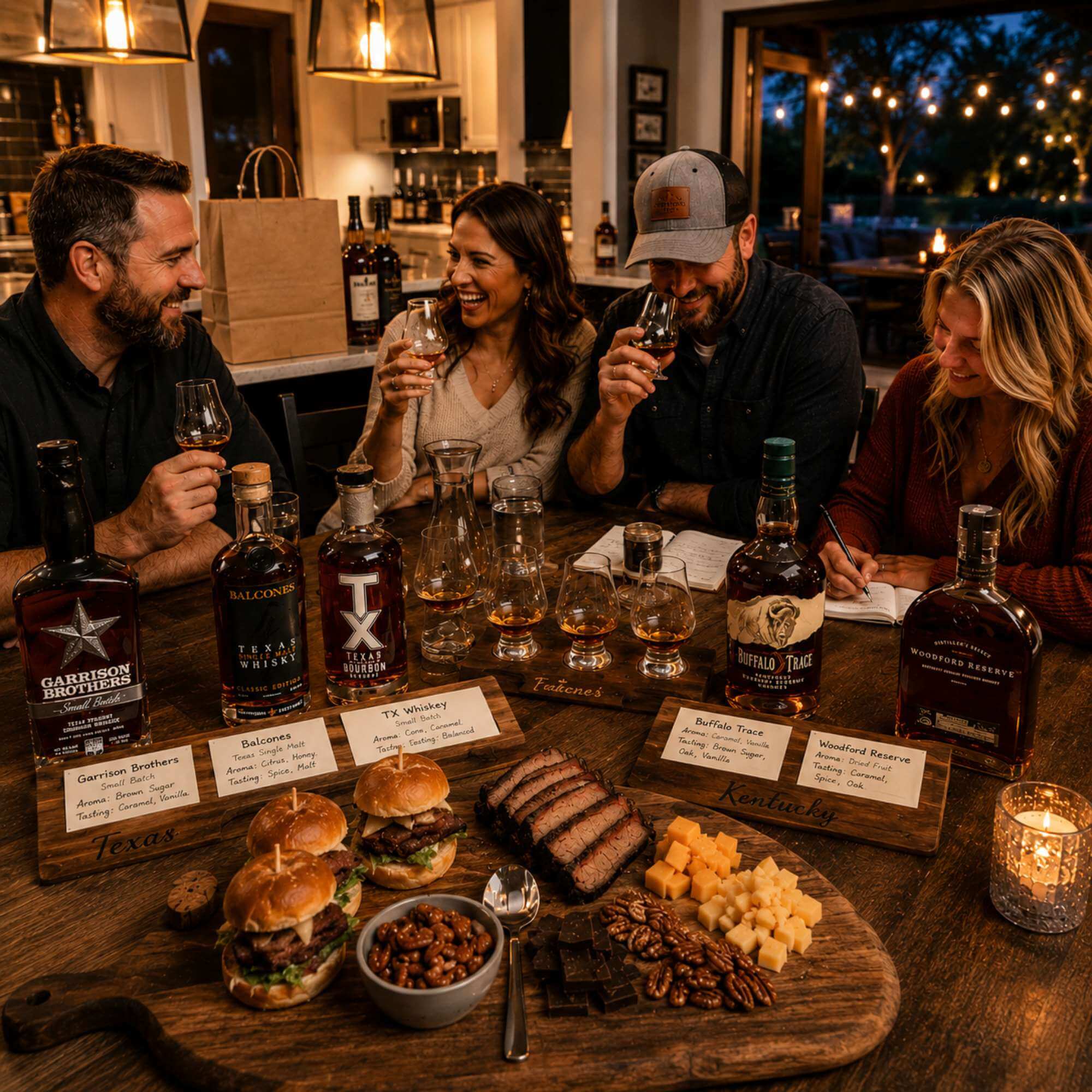
Side-by-side tasting reveals regional differences clearly. Pour equal amounts of Texas and Kentucky bourbon (same age when possible) into identical glasses. Know both without tasting. Texas bourbon typically shows bolder oak and higher-proof alcohol. Kentucky bourbon often smells smoother and more integrated.
Taste neat first to experience the full character. Texas bourbon often tastes more aggressive, with intense oak, higher proof heat, and bolder flavors. Kentucky bourbon tastes more refined with subtle complexity and smoother alcohol integration.
Add a few drops of water to each glass. Water opens up bourbon, revealing hidden flavors and reducing proof. Texas bourbon particularly benefits from water addition. The high proof moderates to show sweetness and complexity beneath oak intensity.
Compare finish length and evolution. Swallow and notice how flavors linger and change. Texas bourbon often shows longer, more intense finishes. Kentucky bourbon might show more complex finishes with flavors evolving from sweet to spicy to oaky over 30-60 seconds.
Try both in classic cocktails. Make Old Fashioneds with each bourbon. Texas bourbon’s bold character stands up to bitters and sugar, creating cocktails with a present bourbon flavor. Kentucky bourbon creates more subtle, refined cocktails where bourbon integrates rather than dominates.
Shopping Guide: Texas vs. Kentucky Bourbon
Budget allocation depends on personal preferences. If you love bold, oak-forward bourbon, allocate more budget to Texas bottles. If you prefer subtle complexity and traditional profiles, focus on Kentucky. Most enthusiasts keep both styles stocked for different moods and occasions.
Beginner-friendly bottles ease newcomers into each style. For Texas bourbon, start with TX Whiskey ($30-35) for an approachable introduction. For Kentucky, Buffalo Trace ($25-30) represents excellent value.
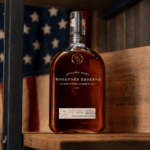
Mid-range ($40-70) bottles show each region’s quality. Garrison Brothers Small Batch showcases Texas bourbon at its best. Woodford Reserve or Knob Creek 9-year represents excellent Kentucky bourbon.
Premium ($70-120) bottles target enthusiasts. Garrison Brothers’ special releases, Balcones True Blue, and similar Texas bourbons compete with Booker’s, Elijah Craig Barrel Proof, and high-end Kentucky selections.
Shopping strategy: Buy Texas bourbon at Zipps Liquor locations across Texas for the best selection and pricing. Browse our complete bourbon selection to compare Texas and Kentucky options side by side.
🥃 Shop Your Bourbon Collection at Zipps
Premium spirits at 10-30% below competitors. Pickup or delivery from 35+ Texas locations.
FAQ
Is Texas bourbon better than Kentucky bourbon?
Neither region produces objectively better bourbon. They produce different bourbons suited to different preferences. Texas bourbon tastes bolder, more oak-forward, and higher in proof due to extreme heat aging. Kentucky bourbon tastes more subtle, refined, and traditional. Both regions produce world-class whiskey that wins international awards.
Why does Texas bourbon cost more than Kentucky bourbon?
Texas bourbon costs more due to small-scale craft production, higher angel’s share losses (8-12% annually vs. Kentucky’s 2-4%), and premium positioning. Texas distilleries produce thousands of cases annually versus Kentucky’s millions. However, when comparing effective age (four Texas years equals roughly eight Kentucky years), pricing becomes more comparable.
Does Texas bourbon age differently than Kentucky bourbon?
Yes, Texas bourbon ages approximately twice as fast as Kentucky bourbon due to extreme heat. Texas rickhouses reach 110°F+ in summer, forcing aggressive barrel breathing. Four-year Texas bourbon often shows complexity matching eight-year Kentucky bourbon. However, the accelerated aging creates different flavor profiles, not just faster aging.
What makes Garrison Brothers special?
Garrison Brothers opened as Texas’s first legal bourbon distillery in 2006, pioneering the entire Texas bourbon category. The distillery uses 100% Texas ingredients, copper pot stills for craft production, and premium aging techniques. The distillery’s small-batch approach (roughly 20,000 cases annually) maintains quality control impossible at larger scales.
Can I buy Texas bourbon outside Texas?
Distribution varies by brand. Garrison Brothers distributes to about 15 states. Balcones reaches 30+ states. Smaller Texas distilleries focus on the Texas market. Zipps Liquor offers online ordering with Texas shipping for residents.
How much bourbon do I need for parties?
Plan for 1.5-2 drinks per guest per hour. Each drink uses 2 ounces of bourbon. A 750ml bottle (25 ounces) makes about 12 drinks. For 20 guests at a four-hour party, purchase 3-4 bottles minimum. Use our party calculator for exact amounts.
What food pairs best with Texas bourbon?
BBQ brisket pairs perfectly with Texas bourbon’s bold character. The heavy oak and high proof cut through fatty meat while complementing smoke. Texas bourbon also matches well with dark chocolate desserts, aged cheddar cheese, and grilled steaks. Kentucky bourbon pairs better with lighter dishes where subtle complexity shines.
Ready to Explore Texas and Kentucky Bourbon?
Visit any of our 35+ Texas locations for expert help and unbeatable pricing. In-and-out in 6 minutes with knowledgeable staff ready to help.
🏆 Texas Retailer of the Year 2023 | 10-30% Lower Prices | $85,000+ to Veterans’ Causes
Visit Zipps Liquor for Texas and Kentucky Bourbon
Understanding the differences between Texas and Kentucky bourbon helps you appreciate American whiskey’s remarkable diversity. Both regions produce world-class bourbon using different approaches that reflect their unique climates, traditions, and philosophies.
Zipps Liquor stocks the complete range of Texas and Kentucky bourbon at the best prices in the state. Our 35+ locations carry Garrison Brothers, Balcones, TX Whiskey, and other Texas distilleries alongside Buffalo Trace, Maker’s Mark, Woodford Reserve, and premium Kentucky selections. Our knowledgeable staff understands both regions’ production methods and can guide you to bottles matching your taste preferences.
Save 10-30% on bourbon compared to other retailers. Our case discounts provide even greater savings when building your bourbon collection. Join our allocated bottle program for fair access to rare releases from both Texas and Kentucky.
Find your nearest Zipps Liquor store and compare Texas versus Kentucky bourbon side by side. Our experts will walk you through flavor profiles, recommend bottles for your preferences, and help you understand what makes each region’s bourbon special.
Call ahead to reserve specific bottles or ask about current bourbon promotions. Whether you prefer Texas innovation or Kentucky tradition, Zipps Liquor delivers quality bourbon at unbeatable prices.