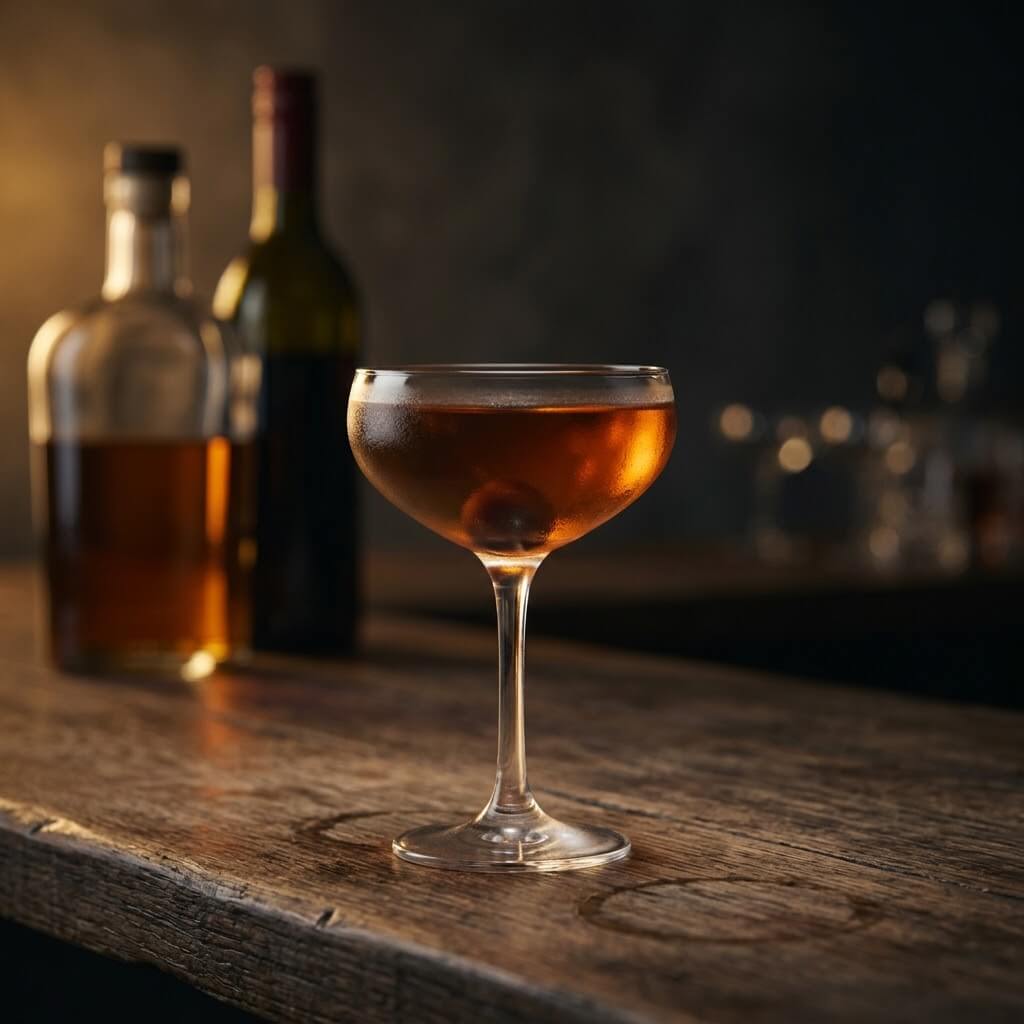
What Is a Manhattan?
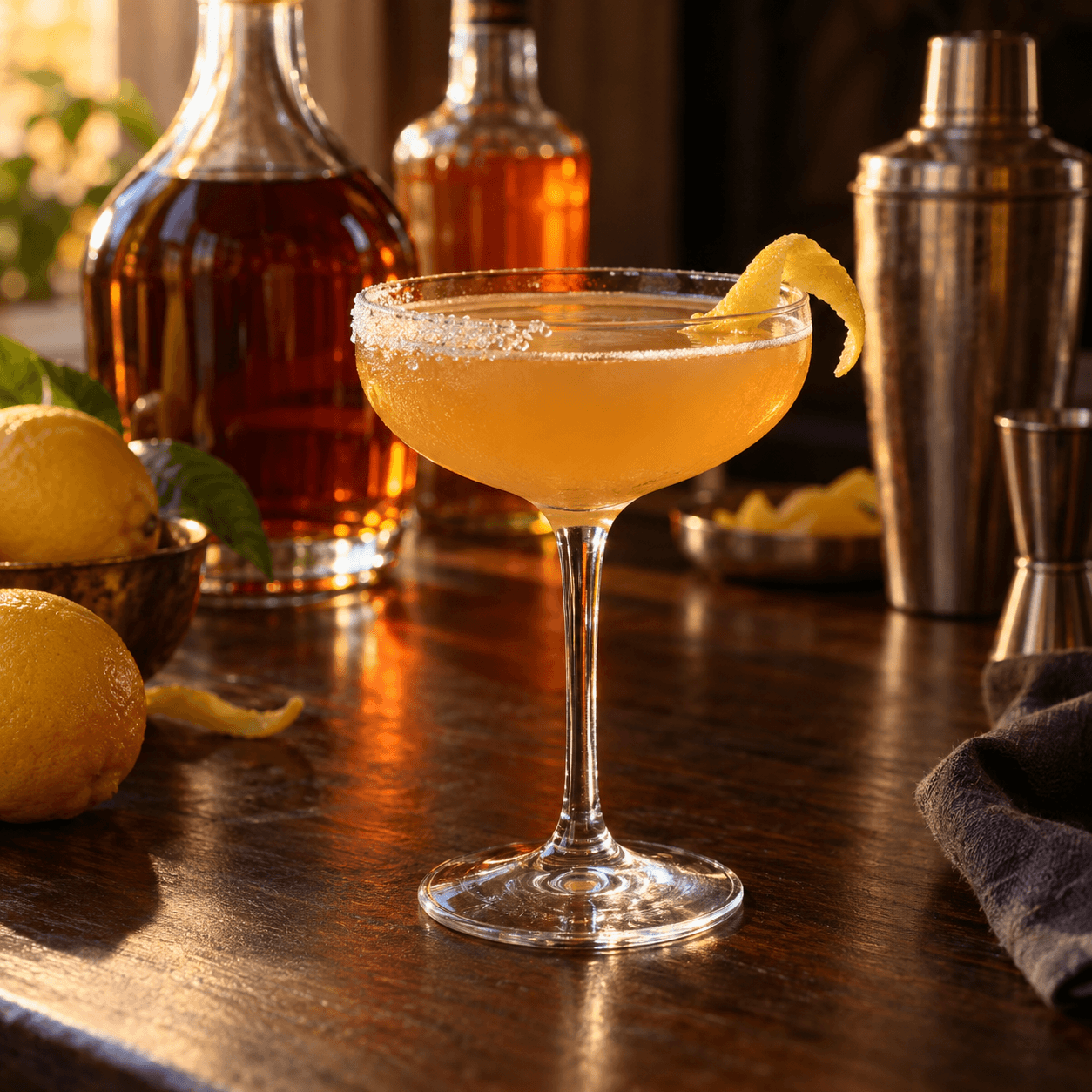
A Manhattan is a stirred cocktail made with American whiskey, sweet vermouth, and aromatic bitters, served either up in a coupe or over a single large cube. The standard ratio is two parts whiskey to one part sweet vermouth, with two to three dashes of bitters, finished with a brandied cherry.
That is the whole drink. There is no shaking, no muddling, and no special equipment beyond a mixing glass and a bar spoon. What separates a good Manhattan from a forgettable one is not technique. It is the quality of three bottles and the discipline to stir long enough.
For Texas hosts heading into the holiday stretch, that simplicity is the appeal. A Manhattan is the drink you can make correctly for twelve people in a kitchen, in between pulling a brisket off the smoker and finding enough chairs.
The Classic Texan Manhattan Recipe
Ingredients
- 2 ounces rye or bourbon whiskey
- 1 ounce sweet vermouth
- 2 to 3 dashes aromatic bitters
- 1 brandied cherry, for garnish
- Optional: a strip of orange peel
Instructions
- Chill your glass. Fill a coupe or rocks glass with ice and cold water and set it aside while you build the drink. A warm glass undoes everything else you are about to do.
- Build in a mixing glass. Add the whiskey, sweet vermouth, and bitters to a mixing glass. If you do not own one, a pint glass works fine.
- Add ice. Fill the mixing glass about two thirds with solid, fresh ice. Small or hollow ice melts too quickly and waters down the drink before it is cold.
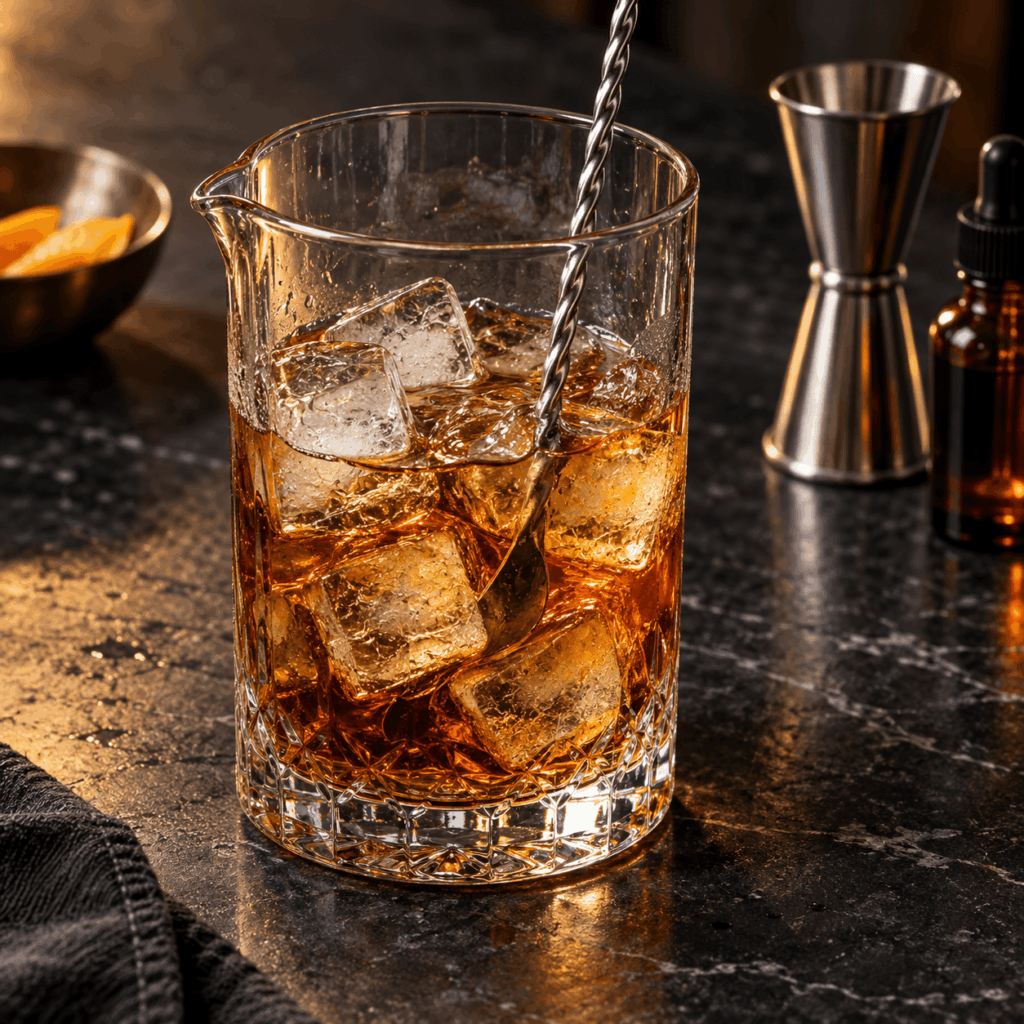
- Stir for 25 to 30 seconds. Use a bar spoon and keep the motion smooth against the inside wall of the glass. You are chilling the drink and adding a little dilution along the way, which is what softens the whiskey and binds the vermouth to it.
- Strain. Dump the ice water out of your chilled glass and strain the cocktail into it.
- Garnish. Drop in a brandied cherry. If you want brightness, express an orange peel over the surface first by squeezing it skin side down, then drop it in or discard it.
Total time: about two minutes once your bottles are open.
Why Stirred, Never Shaken
Shaking aerates a drink and clouds it. That works for cocktails with citrus, egg, or dairy. A Manhattan is all spirits, so shaking leaves it frothy, cloudy, and over diluted. Stirring keeps the texture dense and the appearance clear, which is most of what people mean when they say a Manhattan tastes “smooth.”
Rye or Bourbon: Choosing Your Whiskey
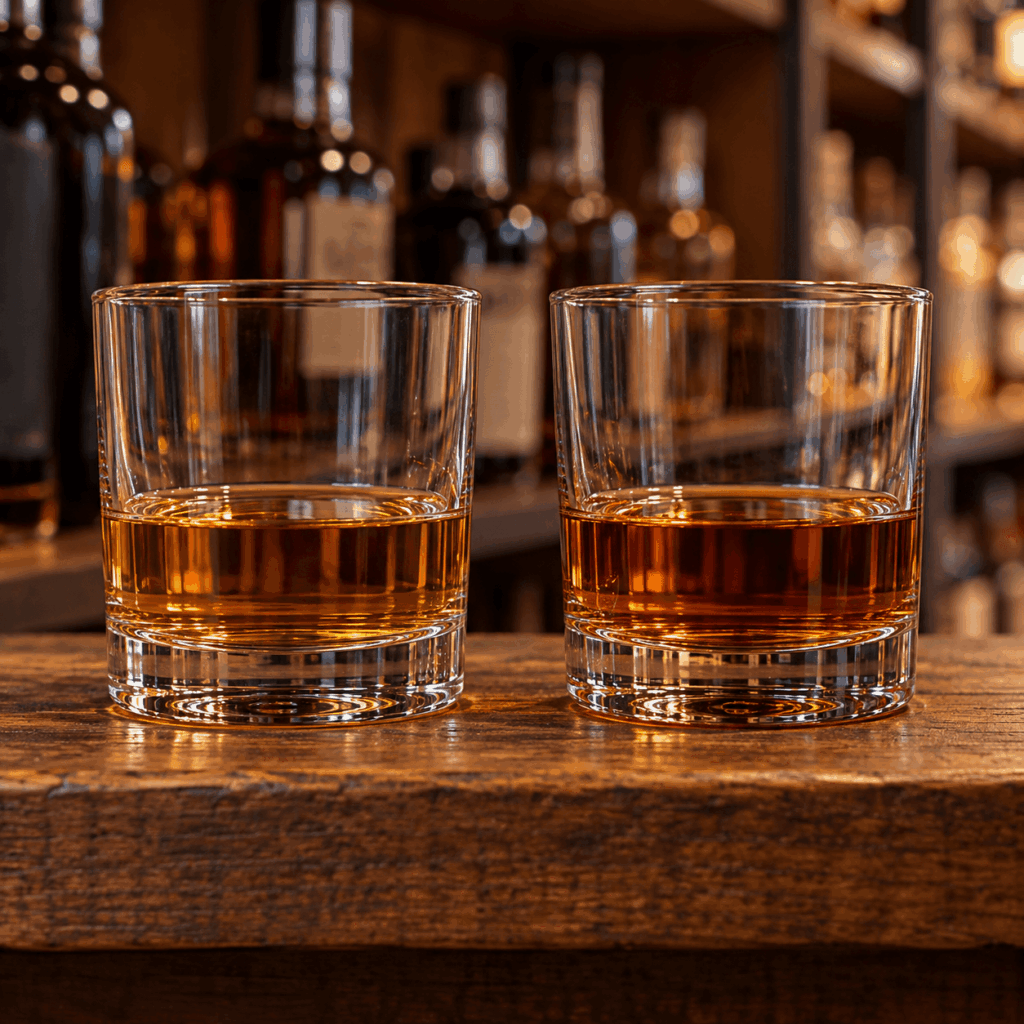
This is the decision that changes the drink most, and there is no wrong answer.
Rye brings pepper, baking spice, and a drier finish. It cuts against the sweetness of the vermouth and produces the sharper, more structured version of the cocktail. This is the historically traditional pour and the one many bartenders reach for first.
Bourbon brings corn sweetness, vanilla, and caramel. It makes a rounder, softer Manhattan that tends to win over people who say they do not like whiskey. If you are serving a mixed group where not everyone drinks spirits neat, bourbon is the safer host choice.
A few practical notes on picking a bottle:
- Proof matters more than price. A whiskey in the 90 to 100 proof range holds up against vermouth and dilution. Anything at 80 proof can get lost in the glass.
- Save the allocated bottles for neat pours. A rare, hard to find bourbon loses its nuance in a mixed drink. Keep a reliable mid shelf bottle as your Manhattan whiskey and drink the allocated and rare releases on their own.
- Texas distillers are worth a spot on the shelf. The state’s whiskey scene has matured considerably, and plenty of Texas ryes and bourbons stir into an excellent Manhattan with a different grain character than Kentucky standards.
Picking your Manhattan whiskey? Rye, bourbon, and Texas-made bottles are on the shelf at Zipps, with everyday low pricing on major brands.
Shop Whiskey OnlineIf rye wins you over, it is worth keeping in rotation beyond this one drink. Our guide to rye whiskey cocktails you can make at home covers the rest of the classics built on the same bottle.
Not sure which whiskey belongs on your bar cart? The team at your nearest Zipps location will walk you through what is on the shelf, and with more than 20,000 products across spirits, wine, and beer, there is almost always a comparable bottle at a better everyday price than you will find nearby.
Vermouth Matters More Than You Think
Most disappointing Manhattans are a vermouth problem, not a whiskey problem.
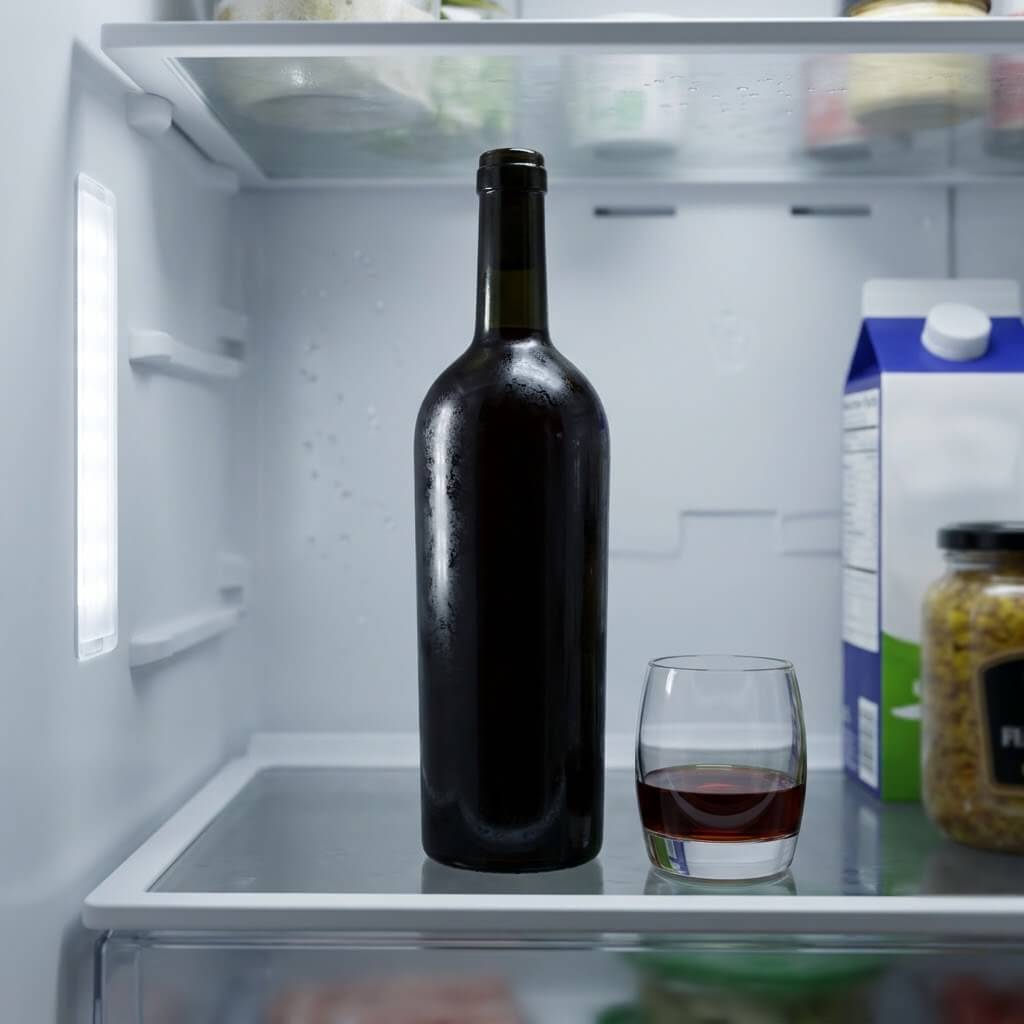
Sweet vermouth, also called red or Italian vermouth, is an aromatic fortified wine. Because it is wine based, it oxidizes. A bottle that has sat open on a counter for months is flat, stewed, and slightly sour, and it will drag down even an excellent whiskey.
How to Store Vermouth
- Refrigerate after opening. Always. This is the single highest impact change most home bartenders can make.
- Use it within one to three months. Sealed and chilled, it generally stays bright for roughly that long.
- Buy the smaller bottle. Unless you are making Manhattans weekly, the 375 ml format gets used while it is still fresh.
If you are unsure whether your bottle has turned, pour a small amount and taste it on its own. Fresh sweet vermouth tastes like spiced cherry and bitter orange. Oxidized vermouth tastes like a dusty cabinet.
Vermouth bottle past its prime? Pick up a fresh 375 ml, plus bitters and brandied cherries, at your nearest Zipps. Order online for pickup or delivery.
Shop Wine & VermouthDry Vermouth Is Not a Substitute
Dry vermouth belongs in a Martini. Swapping it into a Manhattan produces a drink called a Dry Manhattan, which is a legitimate variation but a completely different cocktail. If someone hands you a recipe calling for dry vermouth in a standard Manhattan, it is a typo.
Bitters, Garnish, and the Small Details
Bitters are not optional. Two to three dashes of aromatic bitters tie the whiskey and vermouth together and keep the drink from tasting like two separate things in one glass. Classic aromatic bitters are the standard. Orange bitters, used alongside or in place of a dash, push the drink brighter and work especially well with bourbon.
The cherry should be a brandied or luxardo style cherry, not the neon red kind packed in syrup. The difference is substantial. A good cherry adds a dark, slightly bitter fruit note at the end of the drink. A candy cherry adds sugar and food coloring.
Ice deserves one sentence of attention. If you are serving on the rocks, use one large cube. Large format ice melts slower, so the last sip resembles the first.
A Short History of the Manhattan
The Manhattan is widely dated to the 1880s in New York, which makes it one of the oldest cocktails still ordered by name today. It belongs to the family of stirred, spirit-forward drinks that defined American bartending before Prohibition.
The most repeated origin story credits a banquet at the Manhattan Club, though cocktail historians generally treat that version as unproven. What is better documented is that by the late 1880s the drink was appearing in print in bar manuals, built with American whiskey, vermouth, and bitters in roughly the proportions still used now.
The recipe came through Prohibition largely intact, and its forgiving build is often credited as the reason. Vermouth and bitters cover a multitude of sins in rough whiskey, which was most of what drinkers had access to in the 1920s. When quality American whiskey returned, the Manhattan did not need to change. It simply got better.
That history is useful context for a home bartender. The drink was designed around a short, shelf-stable ingredient list, and it rewards consistency over improvisation. There is no secret version. There is just the standard build, executed cold.
Tools and Glassware You Actually Need
You can make an excellent Manhattan with almost nothing, but four items make the process faster and more consistent.
A mixing glass. Any heavy, straight-sided pint glass will do. The volume matters more than the shape, since you want enough room for ice and liquid to move.
A bar spoon. The long twisted handle lets you stir against the wall of the glass without churning. A long iced tea spoon is a workable substitute.
A julep or hawthorne strainer. Either keeps the ice back. In a pinch, hold the back of a regular spoon across the lip of the glass as you pour.
A jigger. This is the one tool genuinely worth buying. Free pouring a Manhattan throws the ratio off quickly, and the ratio is the entire drink. A double-sided jigger measuring 2 ounces and 1 ounce covers this cocktail exactly.
For glassware, a coupe is traditional for serving up, and a short rocks glass works for serving over ice. Neither is required. What matters is that the glass is cold before the drink goes in.
Manhattan Variations Worth Trying
Once the standard build is second nature, these are the variations most worth keeping in rotation.
Perfect Manhattan. Replace the single ounce of sweet vermouth with a half ounce sweet and a half ounce dry. “Perfect” here means balanced between the two vermouths, not superior. The result is drier and more herbal. Garnish with a lemon twist instead of a cherry.
Rob Roy. The same build with Scotch instead of American whiskey. Smoky, leaner, and a good choice if someone at the table says they only drink Scotch.
Black Manhattan. Swap the sweet vermouth for an Italian amaro. Considerably more bitter and complex, with notes of cola and dark herbs. A strong after dinner option during the holidays.
Reverse Manhattan. Flip the ratio to two parts vermouth and one part whiskey. Lower in alcohol and far more approachable, which makes it a smart option earlier in a long evening or for guests who want something lighter.
The Texan. Not a formal recipe so much as a local habit: a Texas rye, a dash of orange bitters alongside the aromatic, and a wide swath of orange peel. The citrus plays well against the grain and suits warmer weather better than the straight classic. If you want to build this one properly, start with our rundown of Texas whiskey brands worth knowing and pick a rye with some backbone.
Scaling the Manhattan for a Texas Crowd
Manhattans batch extremely well, which makes them ideal for Thanksgiving, holiday parties, and anything where you would rather talk to your guests than stand behind a makeshift bar all night.
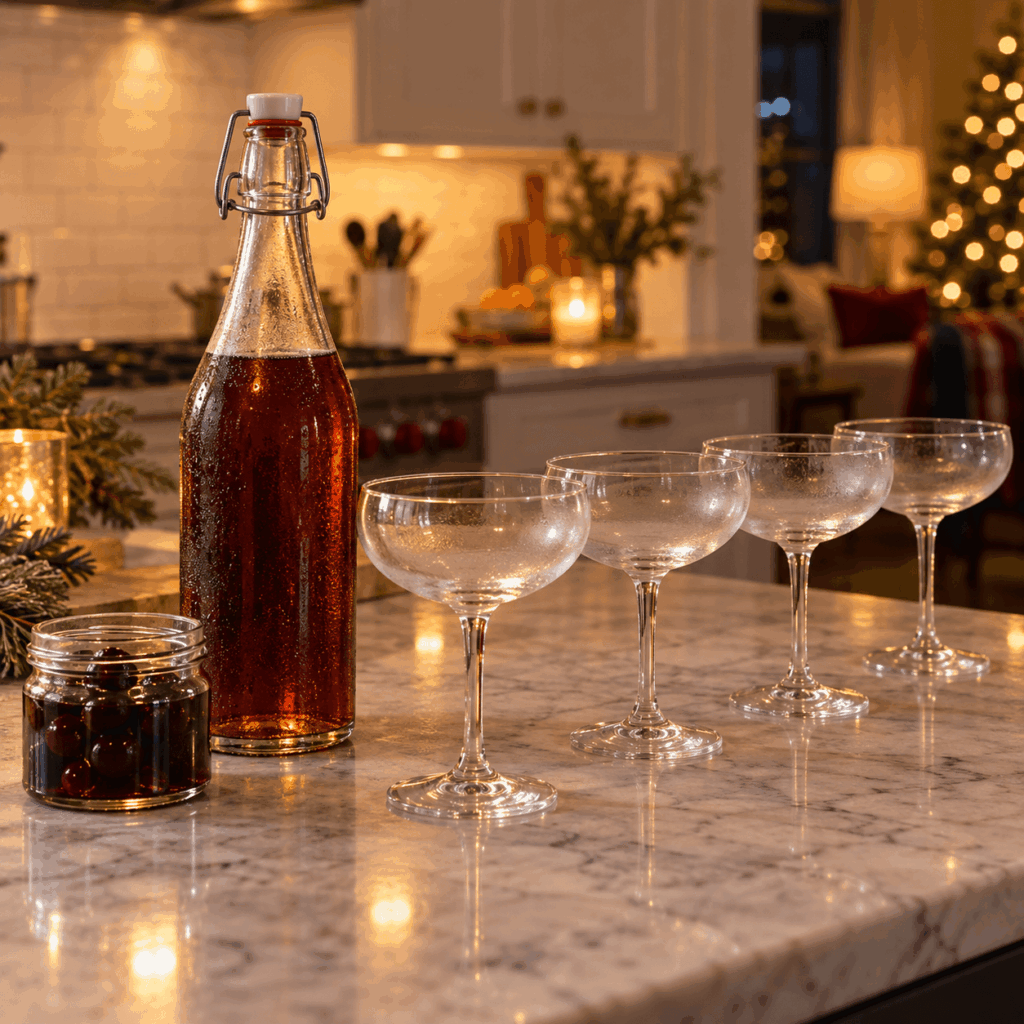
The batching formula per serving:
- 2 ounces whiskey
- 1 ounce sweet vermouth
- 2 to 3 dashes bitters
- 0.5 ounce filtered water, which stands in for the dilution you would get from stirring
For 12 servings, that works out to 24 ounces of whiskey, 12 ounces of sweet vermouth, roughly a teaspoon of bitters, and 6 ounces of water. Combine everything in a sealed bottle or pitcher and refrigerate for at least four hours, ideally overnight. Serve straight from the fridge into chilled glasses, then garnish. No stirring, no ice, no bottleneck at the counter.
Rough quantities for planning:
- A 750 ml bottle of whiskey makes roughly a dozen Manhattans
- A 750 ml bottle of sweet vermouth covers around two dozen
- One bottle of bitters covers an entire season
If you are buying for a larger gathering, ask about case pricing at your local store. Volume discounts on spirits, wine, and beer are where the real savings show up on a party order, and everyday low pricing on major brands adds up fast across a full bar build.
Short on time before a gathering? Zipps delivery reaches many Texas communities the same day, and local pickup gets you in and out in minutes.
Batching for a crowd? Ask about case pricing on spirits, wine, and beer at your local Zipps. Same-day delivery reaches many Texas communities.
Check Delivery Find Your StoreCommon Manhattan Mistakes
Understirring. Twelve seconds is not enough. The drink will taste hot and disjointed. Count to 25 at minimum.
Old vermouth. Covered above, and worth repeating because it is the most common failure by a wide margin.
Too much vermouth. Two to one is the ratio for a reason. Three to two tips sweet in a hurry, especially with bourbon.
Skipping the bitters. Without them you have whiskey and sweet wine sitting next to each other in a glass.
Serving it warm. A Manhattan should be genuinely cold when it hits the table. Chill the glass.
Using your best bottle. Dilution and vermouth will flatten the nuance you paid for. Save allocated and limited releases for a neat pour.
Where to Stock Your Bar in Texas
Building a Manhattan station at home takes three bottles and a jar of cherries, and it is one of the most cost-effective ways to drink well through the holidays. A single bottle each of whiskey, vermouth, and bitters will produce roughly a dozen cocktails, which is a meaningful difference against ordering the same drink out.
Zipps Liquor has served Texas communities since 1994, with locations across rural and urban parts of the state, knowledgeable local staff, and everyday low pricing on major brands. Our shelves carry the full range, from reliable everyday whiskeys to limited and allocated bottles, plus the vermouth, bitters, and garnishes that finish the drink.
Frequently Asked Questions
What is the correct Manhattan ratio?
Two parts whiskey to one part sweet vermouth, with two to three dashes of aromatic bitters. That is 2 ounces of whiskey to 1 ounce of vermouth for a standard single serving.
Should a Manhattan be shaken or stirred?
Stirred. A Manhattan contains no citrus, egg, or dairy, so shaking only clouds the drink and over dilutes it. Stir for 25 to 30 seconds with fresh ice.
Is a Manhattan made with rye or bourbon?
Both are correct. Rye is the traditional choice and produces a drier, spicier cocktail. Bourbon produces a sweeter, rounder drink that tends to suit a wider range of guests.
How long does sweet vermouth last once opened?
Generally one to three months when refrigerated and tightly sealed. Vermouth is a fortified wine and oxidizes after opening, so storing it at room temperature will flatten it much faster.
Can you make Manhattans ahead of time?
Yes. Batch 2 ounces whiskey, 1 ounce sweet vermouth, bitters, and 0.5 ounce water per serving, then refrigerate for at least four hours. Serve cold into chilled glasses and garnish.
What garnish goes in a Manhattan?
A brandied or luxardo style cherry is standard. An expressed orange peel is a common addition, particularly with bourbon or when using orange bitters.
What is the difference between a Manhattan and an Old Fashioned?
A Manhattan uses sweet vermouth for sweetness and body. An Old Fashioned uses sugar and contains no vermouth at all. Both are stirred whiskey cocktails with bitters.
How many Manhattans does one bottle make?
A standard 750 ml bottle of whiskey makes roughly a dozen Manhattans at the standard 2 ounce pour, and one bottle of sweet vermouth covers around two dozen.
Stock Your Manhattan Bar at Zipps
Selection. Savings. Service. Rye, bourbon, vermouth, and bitters at Texas locations statewide, with everyday low pricing on major brands.
Shop Online Find Your StoreTexas Retailer of the Year 2023 | Serving Texas Since 1994 | $100,000+ to Veterans’ Causes