
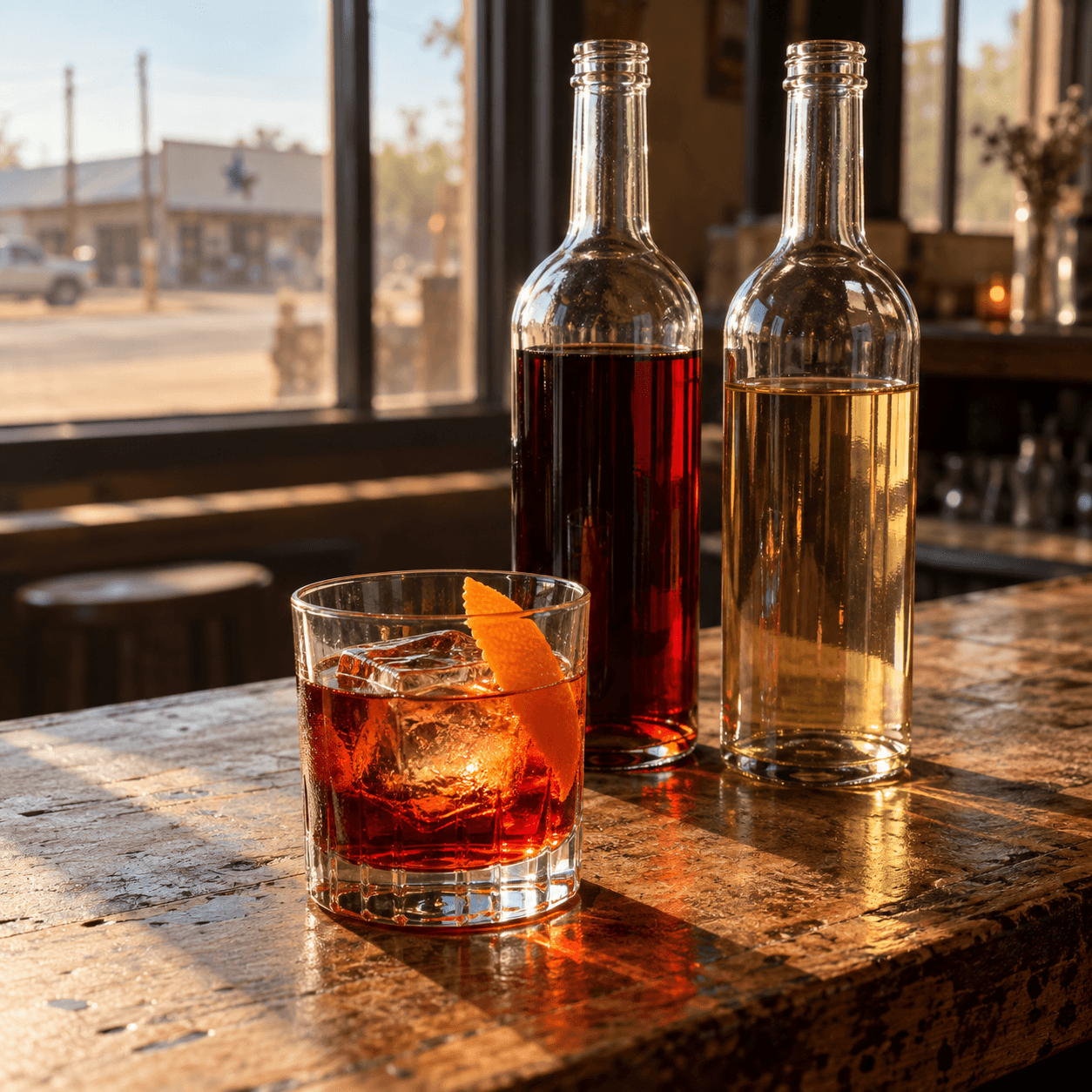
What Is Vermouth?
Vermouth is a fortified wine flavored with botanicals, including a required measure of wormwood, then sweetened and bottled at a strength that sits between table wine and a spirit. It is one of the most misunderstood bottles on most home bar shelves.
Three things define it:
- A wine base. Usually a neutral white wine, regardless of whether the finished vermouth is red or white.
- Fortification. A neutral grape spirit is added, raising the alcohol level and stabilizing the wine.
- Aromatization. Botanicals are infused, including wormwood, from which the name derives by way of the German Wermut.
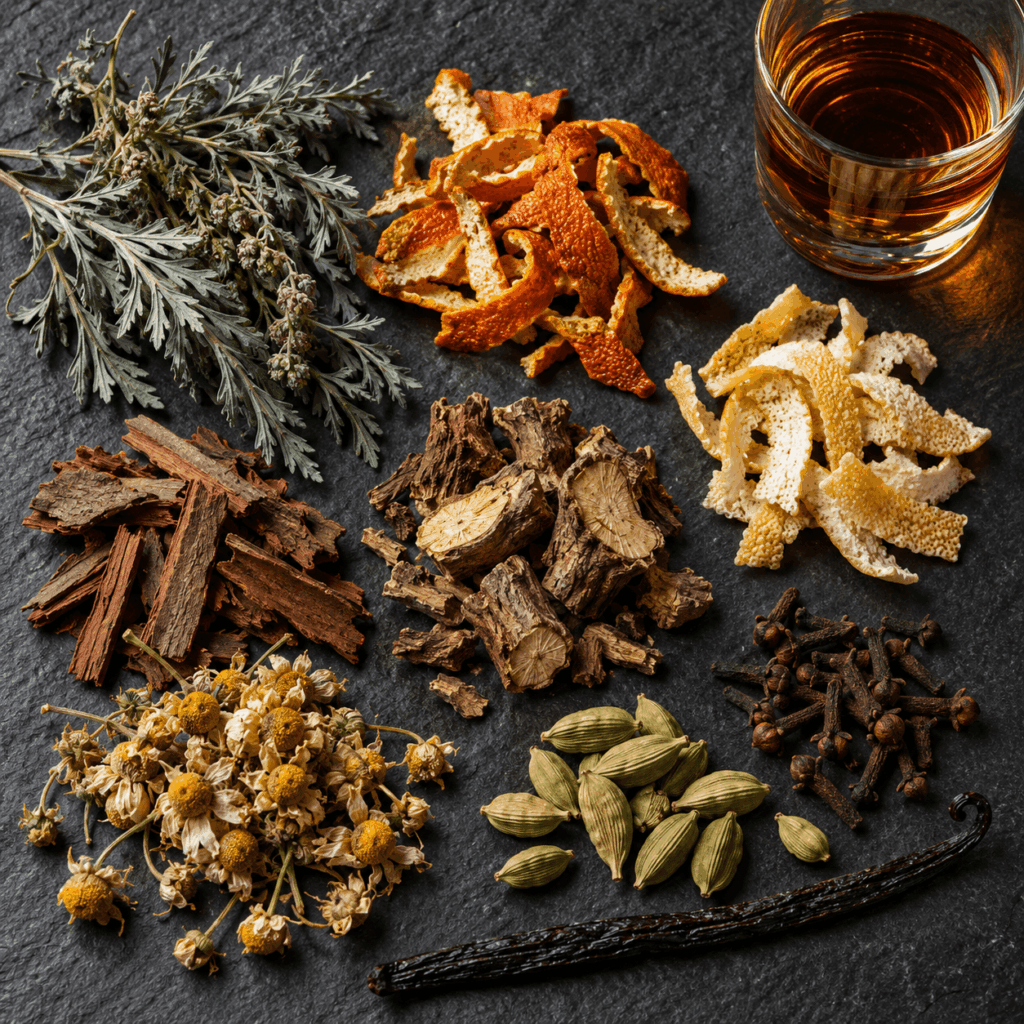
That third step is what makes vermouth interesting. A single producer may draw on a long list of botanicals, commonly including gentian root, citrus peel, cinchona bark, chamomile, cardamom, clove, and vanilla. The recipes are proprietary and the results vary enormously.
Most people encounter vermouth only as the smaller pour in a Martini or a Manhattan. In Italy, Spain, and France it has been a drink in its own right for close to two centuries, and that is probably the most useful thing to know about it.
Sweet vs. Dry Vermouth
This is the distinction that matters most in practice.
Sweet vermouth, also called red or Italian vermouth, is darker, richer, and markedly higher in sugar. It tastes of spiced cherry, bitter orange, vanilla, and dried herbs. Despite the color, it is typically made from white wine and gets its tone from caramel. This is the vermouth in a Manhattan, a Negroni, and an Americano.
Dry vermouth, also called white or French vermouth, is pale, crisp, and far lower in sugar. It tastes of green herbs, white flowers, and citrus pith. This is the vermouth in a Martini.
The Italian and French labels are historical shorthand rather than current geography. Both countries make both styles today, and so do producers in Spain, the United States, and elsewhere.
Other Styles Worth Knowing
- Blanc or bianco. Sweet, but pale in color. Floral and vanilla forward. Excellent on its own over ice.
- Rosé or rosso tenue. A newer category, lighter than sweet and fruitier than dry.
- Extra dry. Even lower in sugar than standard dry. Built for very dry Martinis.
- Amber or ambrato. Oxidative and nutty, closer in character to a sherry.
If you are building a home bar from scratch, start with one sweet and one dry. Those two bottles unlock most of the classic cocktail canon, and our shelves carry both across a range of price points.
Shop Vermouth at Zipps, 10-30% Below Local Competitors
Sweet, dry, blanc, and specialty styles across spirits, wine, and beer. Pickup or delivery from 35+ Texas locations.
How Vermouth Is Made
The process is less mysterious than the flavor suggests.
- Base wine. Producers start with a neutral white wine chosen for consistency rather than character. The wine is meant to be a canvas.
- Botanical infusion. Botanicals are either macerated directly in the wine, infused in the fortifying spirit, or distilled separately and blended in. Each method produces a different intensity.
- Fortification. Neutral grape spirit is added to bring the alcohol to the target level, which both preserves the wine and extracts more from the botanicals.
- Sweetening. Sugar or caramelized sugar is added according to the style. In sweet vermouth, caramel also provides the color.
- Resting and filtering. The finished vermouth rests so the botanicals integrate, then is filtered and bottled.
Some producers age their vermouth in wood, which adds oxidative depth. Most do not, which keeps the botanicals bright.
The One Thing Everyone Gets Wrong: Storage
Vermouth is wine. That single fact explains almost every disappointing cocktail made at home.
Once opened, vermouth begins oxidizing the same way a bottle of chardonnay does. A bottle left on a shelf at room temperature for months will taste stewed, flat, and faintly sour. It will not be dangerous. It will simply be bad, and it will drag down whatever good whiskey or gin you pour alongside it.
Vermouth Storage Rules
- Refrigerate immediately after opening. Always, both sweet and dry. This is the single highest impact change most home bartenders can make.
- Use it within a few months. Sealed and chilled, that is the window where it stays bright.
- Buy the smaller format. Unless you mix several times a week, a half-size bottle gets finished while it is still good.
- Reseal tightly. Oxygen is the enemy. Some drinkers decant into a smaller bottle as the level drops, which genuinely helps.
- Keep it out of the light. Light accelerates degradation in any wine based product.
How to Tell if Your Vermouth Has Turned
Pour a small amount and taste it on its own. Fresh sweet vermouth tastes of spiced cherry and bitter orange with a clean finish. Fresh dry vermouth tastes of white flowers, green herbs, and citrus. Oxidized vermouth of either style tastes dull, sharp at the edges, and vaguely like a dusty cabinet. Trust that assessment and open a new bottle.
Time to replace that bottle? Fresh vermouth costs less than most Texans expect. Order online for pickup, or get same day delivery in many areas.
Replacing a tired bottle should not be an expensive decision, and at Zipps it usually is not. Our everyday low pricing on major brands means keeping fresh vermouth on hand costs less than most Texans expect, and Zipps delivery reaches many areas the same day if you are already mid-recipe.
How to Drink Vermouth on Its Own
This is where most American drinkers are missing something.
Over ice with a twist. Pour sweet vermouth over a large cube, add an orange peel, and that is a complete drink. It is lower in alcohol than a cocktail, complex, and it is what an Italian aperitivo actually looks like most evenings.
Vermouth and soda. Equal parts vermouth and sparkling water with a citrus wedge. Light, refreshing, and well suited to Texas weather for most of the year.
Vermut de grifo style. In Spain, vermouth is served on tap, over ice, with an olive and an orange slice. The olive is not a mistake. The salt plays against the sweetness remarkably well.

Blanc vermouth, chilled, neat. A pale, sweet vermouth served cold in a small wine glass works as an aperitif before dinner, and it will surprise guests who think of vermouth as a Martini accessory.
If this sounds appealing, it fits a wider shift we have written about in our guide to low-ABV spritz cocktails for aperitif season in Texas, where vermouth does a lot of the quiet work.
The appeal here is practical as much as anything. Vermouth is closer in strength to a fortified wine than to a spirit, which makes it a reasonable pour for a long evening or a crowded holiday table.
Vermouth in Cocktails
Martini. Gin or vodka with dry vermouth, stirred and served up. Ratios vary widely depending on taste. Fresh vermouth matters here more than in almost any other drink, because there are only two ingredients.
Manhattan. Two parts whiskey to one part sweet vermouth with aromatic bitters. The sweet vermouth is doing most of the flavor work.
Negroni. Equal parts gin, sweet vermouth, and bitter red aperitif. Stirred over ice with an orange peel.
Americano. Sweet vermouth, bitter red aperitif, and soda water. Lower in alcohol than a Negroni and arguably better in warm weather.
Boulevardier. A Negroni with bourbon or rye in place of gin. Richer and a natural cold weather option.
Adonis. Sherry and sweet vermouth with orange bitters. Very low in alcohol and badly underrated.
Perfect Manhattan or Perfect Martini. “Perfect” means split evenly between sweet and dry vermouth rather than using one. A useful way to work through both bottles.
Building one of these at home? Gin, bourbon, rye, and sherry for every drink above, all in stock across our Texas stores.
Shop SpiritsA Short History of Vermouth
Wine infused with herbs goes back to antiquity, but vermouth as a commercial product traces to the late 1700s in Turin, Italy, where a distiller began bottling a sweetened, wormwood-flavored wine for sale. Within a few decades it was a category, and by the mid-nineteenth century producers in both Italy and France were shipping it internationally.
The French developed the drier style, built on a lighter base wine and leaning on alpine herbs. The Italians kept to the richer, sweeter profile. That regional split is where the “Italian vermouth” and “French vermouth” shorthand came from, and it stuck long after both countries began making both styles.
Vermouth arrived in American bars in the second half of the nineteenth century and effectively created the modern cocktail. The Martini and the Manhattan, the two drinks that define the form, both depend on it. Many of the classic cocktails still ordered by name today were built in the decades right after vermouth became widely available.
Its decline in the United States came in the mid-century, when fashion pushed toward ever-drier Martinis until the vermouth was nearly ceremonial. A generation of drinkers grew up with bottles that sat open and warm for years, which is largely why the category earned a reputation it did not deserve. The current revival is really just a return to treating it like wine.
Pairing Vermouth With Texas Food
Vermouth’s bitterness and acidity make it a flexible table drink, and it handles Texas cooking better than most people expect.
With barbecue. A sweet vermouth over ice with an orange peel stands up to smoked brisket and sausage. The spice and dried fruit notes work the same way a forward red fruit would, at a lower strength.
With Tex-Mex. Blanc or dry vermouth with soda and a lime wedge cuts through heat, cheese, and fried textures cleanly. This is a strong alternative when you want something lighter than a Margarita.
With a cheese board. Sweet vermouth and aged cheddar is a genuinely good pairing, and dry vermouth works with soft and fresh cheeses the way a crisp white wine does.

With the holiday table. This is where vermouth earns its spot in November. A lower proof aperitif before a long Thanksgiving meal is more practical than a cocktail, and sweet vermouth with soda and an orange slice is about as easy as hosting gets.
If you are hosting for a crowd, our local teams can help you plan quantities and pick bottles that stretch, which is the kind of thing a small town store does better than a warehouse.
Cooking With Vermouth
Dry vermouth is a better kitchen wine than most actual white wine, for one practical reason: it keeps. A bottle of sauvignon blanc opened for a pan sauce is useless within days. Refrigerated dry vermouth stays usable far longer.
Use it anywhere a recipe calls for dry white wine. It deglazes beautifully, it carries herb flavor into cream sauces, and it works with chicken, fish, mussels, and risotto. The botanicals add a layer that plain wine does not.
Sweet vermouth has kitchen uses too, mostly in braises and pan sauces for red meat, where its sugar and spice behave something like a splash of port.
Buying Vermouth: What to Look For
Check the bottling or best by date. Vermouth is not vintage-dated, but many bottles carry a production marking. Fresher is better, and a bottle that has sat on a warm shelf for a long stretch is already compromised.
Match the format to your habits. If a Martini is a monthly event, buy the smaller bottle. If you make Negronis weekly, the larger format makes sense.
Spend a little more than you think you need to. Vermouth is often a third or more of the drinks it goes into, and it is one of the least expensive ways to improve a cocktail. The gap in quality between the bottom shelf and the middle shelf is larger here than almost anywhere else in the store.
Buy both styles. Sweet and dry are not interchangeable, and having both opens up most of the classic cocktail canon.
Our local teams can walk you through the vermouth shelf at your nearest Zipps location. With more than 20,000 products across spirits, wine, and beer, we carry sweet, dry, blanc, and specialty styles, and our everyday low pricing on major brands means stocking both costs less here than at most local competitors.
Need both styles on the shelf? Sweet and dry are not interchangeable. Browse our full wine and vermouth selection online for pickup or delivery.
Shop Wine & VermouthVermouth Substitutes
If you are out, these work with caveats.
For sweet vermouth: a dry sherry with a small amount of simple syrup, a red aperitif wine, or port combined with a dash of aromatic bitters. None is a true match, but all will produce a drinkable cocktail.
For dry vermouth: a crisp, dry white wine with a dash of herbal liqueur, or a dry sherry such as fino or manzanilla. Sherry is the closest in character.
What does not work: skipping it entirely. A Manhattan without vermouth is whiskey with bitters, and a Martini without vermouth is chilled gin. Both are perfectly fine drinks, but they are different drinks.
Where to Buy Vermouth in Texas
Zipps Liquor has served Texas communities since 1994, with locations across rural and urban parts of the state and everyday low pricing on major brands. Our shelves carry vermouth across sweet, dry, and specialty styles, alongside a deep wine selection and the spirits that pair with them.
Looking for rare and limited bottles to pour alongside your vermouth? Check our allocated releases. Short on time before a gathering? Local pickup gets you in and out in minutes, and our staff know the shelf well enough to point you to the right bottle without a lecture.
Frequently Asked Questions
What is vermouth made of?
Vermouth is a white wine base fortified with neutral grape spirit, infused with botanicals including wormwood, and sweetened. The finished product is stronger than table wine but weaker than a spirit.
What is the difference between sweet and dry vermouth?
Sweet vermouth is darker, richer, and considerably higher in sugar, with spiced cherry and orange notes. Dry vermouth is pale, herbal, and much lower in sugar.
Does vermouth need to be refrigerated?
Yes, after opening. Vermouth is a wine based product and oxidizes once the bottle is opened. Refrigerate it and use it within a few months for the best flavor.
How long does vermouth last after opening?
A few months refrigerated and tightly sealed. Stored at room temperature it degrades noticeably within weeks and tastes flat and sour.
Can you drink vermouth straight?
Yes. Vermouth is served on its own throughout Italy and Spain, typically over ice with a citrus twist or an olive. Its lower strength makes it a practical aperitif.
Is vermouth a wine or a spirit?
It is a wine. Specifically, it is an aromatized fortified wine, meaning wine that has been flavored with botanicals and strengthened with a neutral grape spirit.
What can I use instead of vermouth?
Dry sherry is the closest substitute for dry vermouth. For sweet vermouth, try a red aperitif wine or port with a dash of aromatic bitters. Neither is an exact match.
Why does vermouth have wormwood in it?
Wormwood is the defining botanical of the category and gives vermouth its name, from the German Wermut. It contributes the characteristic bitterness that balances the sugar.
Is vermouth gluten free?
Vermouth is made from a grape wine base and grape spirit, so it does not contain grain. Check the label if you have a specific sensitivity, since botanical and finishing practices vary by producer.
Which vermouth should a beginner buy first?
Buy one sweet and one dry in the smaller format. That pair covers the Martini, the Manhattan, and the Negroni, and you will finish both bottles before they fade.
Stock Your Vermouth Shelf at Zipps
Selection. Savings. Service. Sweet, dry, blanc, and specialty vermouth at 35+ Texas locations, priced 10-30% below local competitors.
Texas Retailer of the Year 2023 | Serving Texas Since 1994 | $85,000+ to Veterans’ Causes