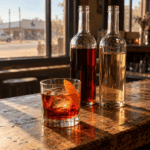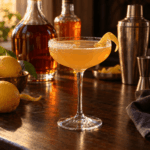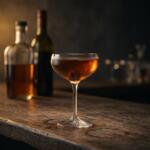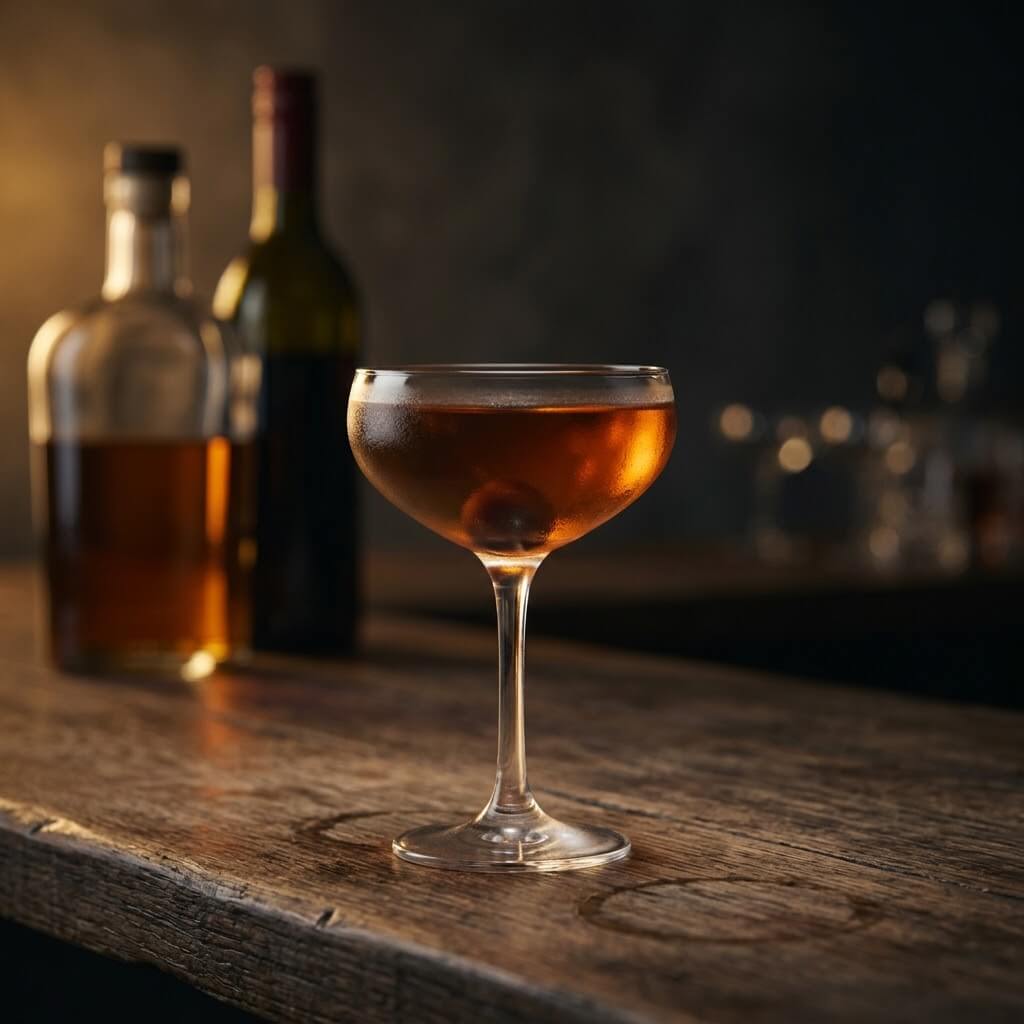
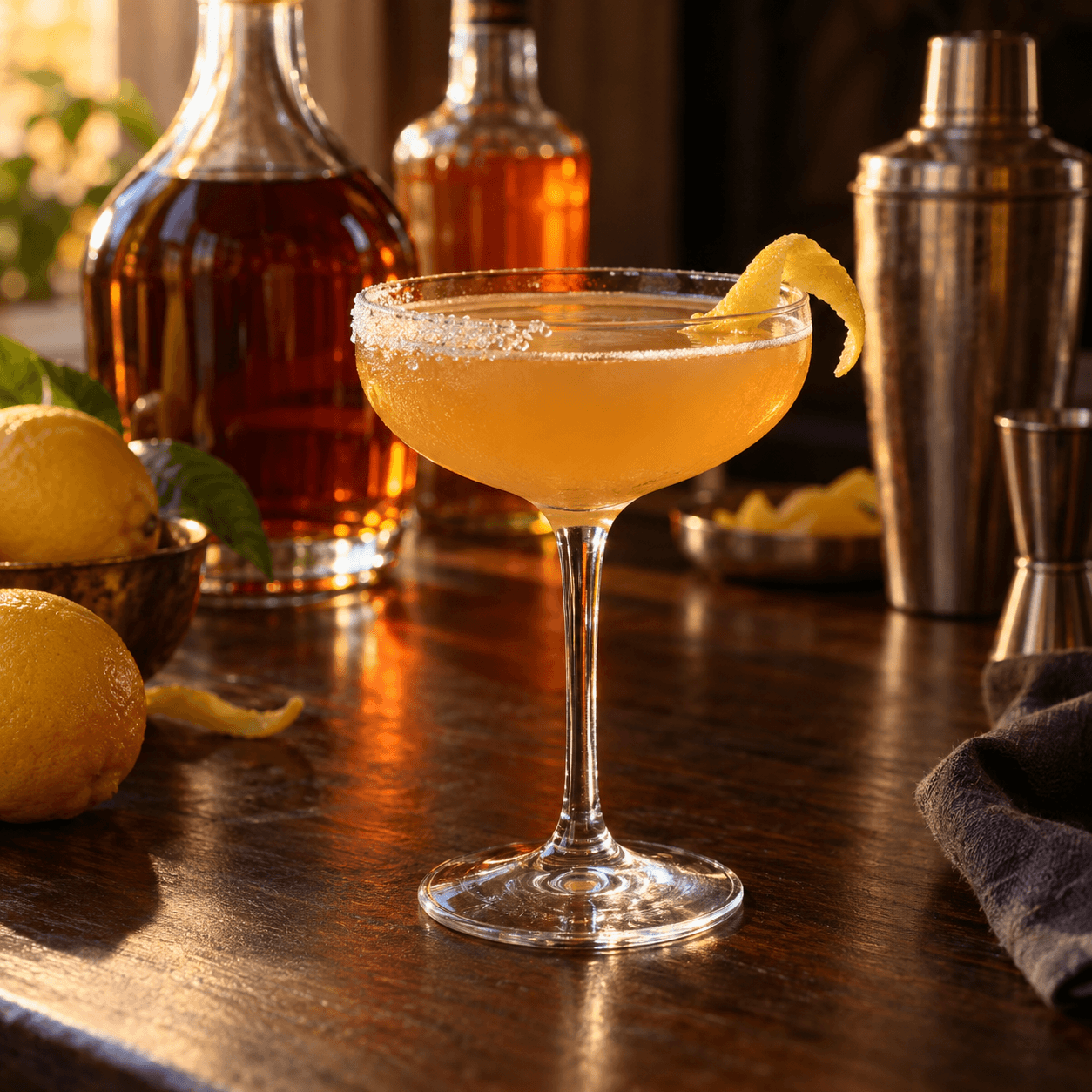
What Is a Sidecar?
A Sidecar is a shaken cocktail made with cognac, orange liqueur, and fresh lemon juice, served up in a chilled coupe with an optional sugar rim. The common modern ratio is two parts cognac to one part orange liqueur to three-quarters part lemon juice.
It belongs to the sour family, which means spirit plus citrus plus a sweetening agent. What sets it apart is that the sweetener is itself a spirit. The orange liqueur does double duty, adding sugar and a layer of bitter citrus peel that plain simple syrup cannot replicate.
The result is bright, sharp, and considerably more elegant than the ingredient list suggests. It is a good cold-weather cocktail, which makes it a natural fit for Texas in November, when evenings finally cool off and brandy starts to make sense again.
The Classic Sidecar Recipe
Ingredients
- 2 ounces cognac
- 1 ounce orange liqueur
- 0.75 ounce fresh lemon juice
- Optional: superfine sugar for the rim
- Optional: a lemon twist, for garnish
Instructions
- Rim the glass, if you want one. Run a lemon wedge around the outer edge of a chilled coupe, then roll the outside of the rim in superfine sugar on a small plate. Rim only the outside so sugar does not fall into the drink.
- Juice the lemon fresh. This is not a step to skip. Bottled lemon juice tastes flat and slightly metallic, and in a three-ingredient drink there is nothing to hide behind.
- Combine. Add cognac, orange liqueur, and lemon juice to a shaker.
- Add ice and shake hard. Fill the shaker about two-thirds full with fresh ice and shake vigorously for 12 to 15 seconds. You want the tin frosted on the outside.
- Double strain. Pour through the shaker strainer and a fine-mesh strainer into the chilled coupe. This catches ice shards and pulp and gives you a clean, silky texture.
- Garnish. Express a lemon twist over the surface and drop it in, or lay it across the rim.
Total time: about three minutes, most of it juicing.
Why This One Gets Shaken
Unlike a Manhattan or an Old Fashioned, the Sidecar contains citrus. Shaking does three things that stirring cannot: it chills faster, it aerates the juice into a lighter texture, and it emulsifies the lemon with the spirits so the drink does not taste layered. Stir a Sidecar and you get something thin and separated.
Getting the Ratio Right
The Sidecar is the rare classic where recipes genuinely disagree, and both camps have a point.
The French school calls for equal parts: one ounce each of cognac, orange liqueur, and lemon juice. This is the older version and it is noticeably sweeter and more citrus-forward. Some drinkers find it cloying by modern standards.
The English school calls for two parts cognac to one part liqueur to one part lemon. Drier, more brandy-forward, and closer to what most bars serve today.
The modern standard splits the difference at 2 : 1 : 0.75, which is the version in the recipe above. It keeps the cognac in the foreground while leaving enough acid to stay refreshing.
A practical approach: start at 2 : 1 : 0.75 and adjust from there. If your lemons are especially sour, pull the juice back to half an ounce. If your orange liqueur is on the drier side, you may want a quarter ounce of simple syrup to round it out. Taste before you strain, using a straw dipped into the shaker.
Choosing Your Cognac
Cognac is brandy made from grapes in a specific region of France under specific rules. For cocktails, the classification on the label tells you most of what you need to know.
VS means the youngest brandy in the blend has aged at least two years. VS is built for mixing. It is bright, fruit-forward, and holds its shape against lemon and liqueur.
VSOP means at least four years. Rounder, with more oak and dried fruit. This is the sweet spot for a Sidecar if you want a little more depth, and it is what most bartenders reach for.
XO means at least ten years. Excellent, complex, and largely lost in a mixed drink. Pour it neat instead.
For a home bar, a solid VSOP will make every Sidecar you want to make and doubles as a respectable after-dinner pour. Our local teams can point you to what is on the shelf, and the cognac and brandy selection sits alongside more than 20,000 products across spirits, wine, and beer. On major brands, the gap against local competitors adds up quickly.
🥃 Shop Cognac and Brandy at Zipps
VS, VSOP, and XO on the shelf, plus orange liqueurs worth the upgrade. Everyday low pricing on major brands at Texas locations statewide.
Can You Substitute Brandy?
Yes, with an understanding of the trade-off. All cognac is brandy, but not all brandy is cognac. American and Spanish brandies make a perfectly good drink, often a slightly sweeter and less structured one. If you use a non-cognac brandy, consider pulling the orange liqueur back slightly to keep the drink from tipping sweet.
Armagnac, cognac’s rustic cousin from southwest France, makes an excellent and slightly earthier Sidecar if you can find a bottle.
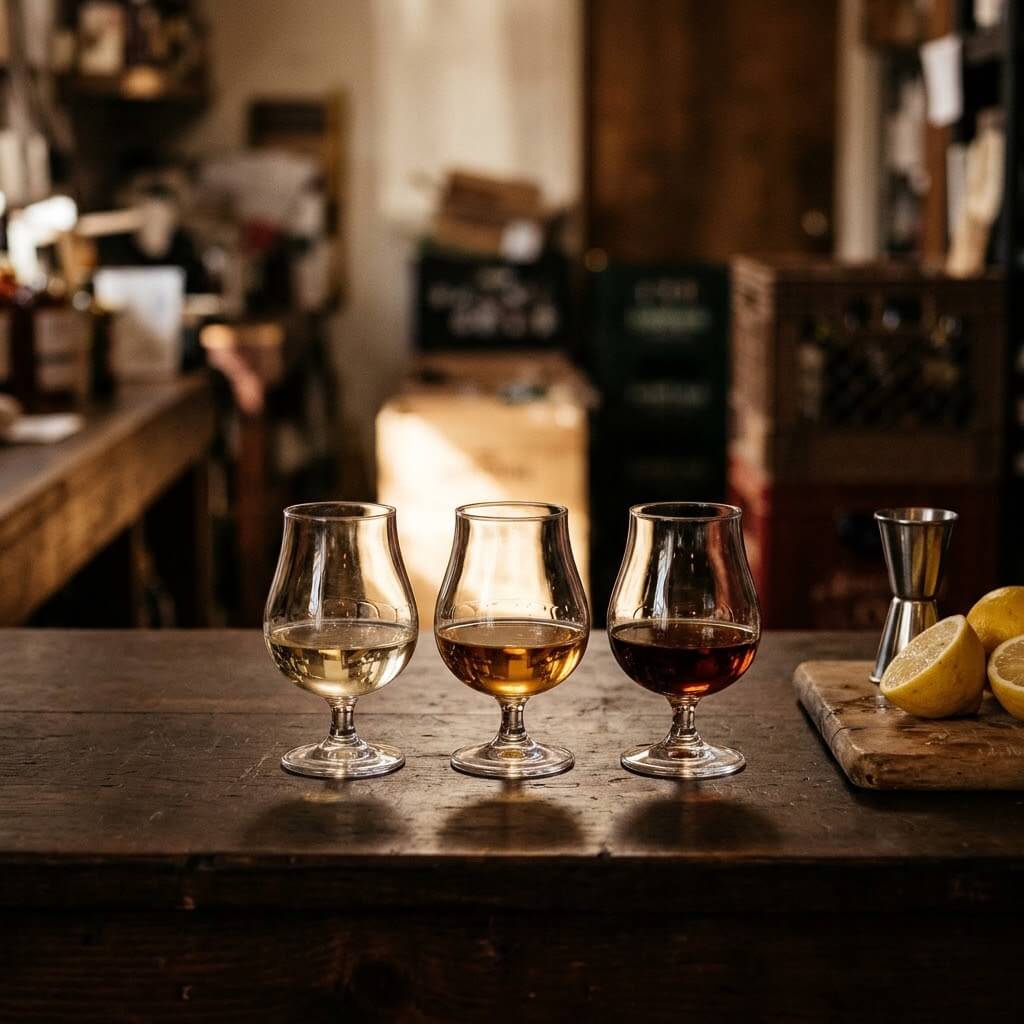
Orange Liqueur: Curaçao, Triple Sec, and the Difference
This is where a lot of home Sidecars go wrong.
Triple sec is a broad category of clear orange liqueur. Quality varies enormously across the shelf, and the lowest-tier products are mostly sugar with orange flavoring. They will make your Sidecar taste like candy.
Curaçao is typically richer, sometimes barrel-aged, often slightly lower in sugar and higher in proof. It brings actual bitter orange peel character.
Orange liqueurs built on a brandy base sit at the premium end of the category. Because the base spirit is itself a grape brandy, they harmonize with cognac in a way neutral-spirit liqueurs do not. This is the category most worth upgrading to if you make Sidecars regularly.
A reasonable rule: the orange liqueur should cost real money relative to the cognac, not pennies. It is a full third of the drink.
🍊 Upgrading your orange liqueur? Browse triple sec, curacao, and brandy-based orange liqueurs online for pickup or delivery.
Shop LiqueursSugar Rim: Yes or No?
There is no correct answer, but there is a useful way to decide.
Rim it if you are using a drier orange liqueur, if your lemons are very tart, or if you are serving guests who prefer sweeter cocktails. The sugar hits before the drink does and softens the first impression.
Skip it if you are using a sweeter liqueur or if you want the brandy character front and center. A naked Sidecar is a sharper, more adult drink.
Half rim it as a compromise. Sugar only half the rim and let the drinker choose which side to sip from. This is what a lot of careful bars do, and it is a small touch that guests notice.
Use superfine sugar rather than granulated. It adheres better and does not feel gritty.
A Short History of the Sidecar
The Sidecar emerged in the years immediately after the First World War, with competing claims from Paris and London. The most repeated story credits a bar in Paris and an army captain who arrived at the door in the sidecar of a motorcycle, which is a tidy explanation that nobody has ever managed to document.
What is verifiable is that the recipe appears in print in the early 1920s in both British and French cocktail books, with the equal-parts formula in the French version and the brandy-forward formula in the English one. That split is the origin of the ratio debate that still runs through the drink today.
The Sidecar faded through the middle of the century as American drinking moved toward vodka and lighter styles, then came back with the classic cocktail revival of the 2000s. Its return had a lot to do with better orange liqueurs reaching the market. The drink only works when all three ingredients are good, and for a long stretch the orange liqueur on most shelves was not.
Common Sidecar Mistakes
Bottled lemon juice. The fastest way to ruin this drink. Fresh juice is not a refinement here, it is a requirement.
Too much orange liqueur. If your Sidecar tastes like orange candy, the liqueur is either too sweet or too plentiful. Pull it back and let the brandy lead.
A warm glass. Chill the coupe while you shake. A Sidecar served in a room-temperature glass loses its edge within a minute.
Under-shaking. Twelve seconds minimum, hard. A weak shake leaves the drink thin and the citrus unintegrated.
Sugar on the inside of the rim. Rim only the outside edge, or the sugar slides into the drink and throws off a ratio you worked to get right.
Using your best bottle. An XO cognac in a Sidecar is a pleasant drink and a missed opportunity. Mix with VS or VSOP and save the older brandy for a neat pour after dinner.
Sidecar Variations
Between the Sheets. Add a half ounce of white rum and reduce the cognac accordingly. Lighter, a little tropical, and considerably stronger than it tastes.
Chelsea Sidecar. Gin instead of cognac. Crisp, botanical, and a good warm-weather alternative.
Boston Sidecar. Equal parts cognac, rum, and orange liqueur with lemon. Richer and rounder.
Cognac Sour. Drop the orange liqueur, use simple syrup instead, and add an egg white. A different drink, but adjacent, and worth knowing if you are out of liqueur.
Sparkling Sidecar. Build the standard drink, strain into a flute, and top with a splash of sparkling wine. A strong choice for Thanksgiving or a holiday toast, and it stretches one bottle across more guests.
Batching Sidecars for a Crowd
Citrus cocktails are harder to batch than spirit-forward ones because fresh juice degrades, but a Sidecar batches well within a window of a few hours.
Per serving:
- 2 ounces cognac
- 1 ounce orange liqueur
- 0.75 ounce fresh lemon juice
- 0.75 ounce filtered water
Mix the cognac and orange liqueur in advance and refrigerate. Juice your lemons no more than four hours before the event and add them, along with the water, shortly before serving. Shake individual portions over ice if you want the texture, or serve straight from the chilled bottle into coupes if you are moving fast.
Rough quantities for planning:
- A 750 ml bottle of cognac yields about 12 Sidecars
- A 750 ml bottle of orange liqueur covers about 25 Sidecars
- Plan on roughly one lemon per two drinks
For larger gatherings, ask about case pricing at your nearest Zipps Liquor store. Volume discounts are where the savings stack up on a full bar order, and our local staff can help you size the quantities before you buy.
🛒 Buying for a crowd? Ask your local Zipps about case pricing, or order ahead and pick up on your way to the party.
Texas Spots Known for the Sidecar
If you would rather have someone else do the shaking, the Sidecar turns up on Texas menus at bars that take classics seriously.
- Hopfields (Austin). A French-focused gastropub in central Austin with a full cocktail program, where a brandy classic fits the menu naturally.
- Sidecar at Prince Solms Inn (New Braunfels). A basement cocktail club built around classic drinks and live jazz, named for the cocktail itself.
- Sidecar Social (Addison). A large entertainment and dining venue with craft cocktails, games, and a sizable patio.
- Local twists. Some Texas bars and distillers build their own versions using state spirits, swapping in a Texas light whiskey for the brandy or a Texas-made orange liqueur for the triple sec.
Menus change often, so it is worth checking a current list before you go. The version you make at home will cost a fraction of what the same drink runs at a bar, and once the three bottles are on your shelf they will produce rounds for months.
Where to Stock Your Bar in Texas
Zipps Liquor has served Texas communities since 1994, with stores across rural and urban parts of the state and everyday low pricing on major brands. Our shelves carry cognac and brandy at every tier, orange liqueurs worth the upgrade, and sparkling wine if you are building a Sparkling Sidecar for the holidays. If you are stocking a bar for the season, our guide to easy three-ingredient cocktails covers more drinks built from the same few bottles. Selection, savings, and service, with local staff who will tell you honestly which bottle is worth the extra few dollars and which one is not.
Short on time before a gathering? Zipps delivery covers many Texas areas same day, and local pickup gets most folks in and out in minutes.
Frequently Asked Questions
What is in a Sidecar cocktail?
Cognac, orange liqueur, and fresh lemon juice, shaken and served up in a chilled coupe. The common modern ratio is 2 ounces cognac, 1 ounce orange liqueur, and 0.75 ounce lemon juice.
Is a Sidecar shaken or stirred?
Shaken. The drink contains fresh citrus, so shaking is needed to chill it properly and emulsify the juice with the spirits. Shake hard for 12 to 15 seconds and double strain.
Can you make a Sidecar without cognac?
Yes. Any good brandy works, including American, Spanish, or Armagnac. The drink will be slightly sweeter and less structured with most non-cognac brandies, so you may want to reduce the orange liqueur a touch.
Does a Sidecar need a sugar rim?
No. The sugar rim is optional and historically inconsistent. Rim the glass if your drink leans tart or your guests prefer sweeter cocktails, and skip it if you want the brandy character forward.
What is the best cognac for a Sidecar?
A VSOP is the usual recommendation. VS works well and is built for mixing, while XO is better enjoyed neat since its complexity gets lost behind lemon and liqueur.
How is a Sidecar different from a Margarita?
Structurally they are the same drink. Both are a base spirit, an orange liqueur, and citrus. The Margarita uses tequila and lime, the Sidecar uses cognac and lemon.
Can you batch Sidecars ahead of time?
Partially. Combine the cognac and orange liqueur in advance and refrigerate, then add fresh lemon juice and water within a few hours of serving. Fresh citrus loses brightness overnight.
Stock Your Bar for Sidecar Season at Zipps
Selection. Savings. Service. Cognac, brandy, and orange liqueur at every tier, with everyday low pricing on major brands at Texas locations statewide.
★ Texas Retailer of the Year 2023 | Serving Texas Since 1994 | $100,000+ to Local and Veterans’ Causes